
Diversity of Opinion: How To Predict a Highly Successful Team

Jillian Penkin • January 20, 2026

Some things in life are predictable- gravity, the sun rising and setting and of course a snowy Buffalo winter. We can predict these things because it’s a pattern (and trust me, if it doesn’t snow in Buffalo during winter- we’ve got bigger problems to deal with than our teams) 

So how can we apply patterns to our team’s behavior and predict successful outcomes?

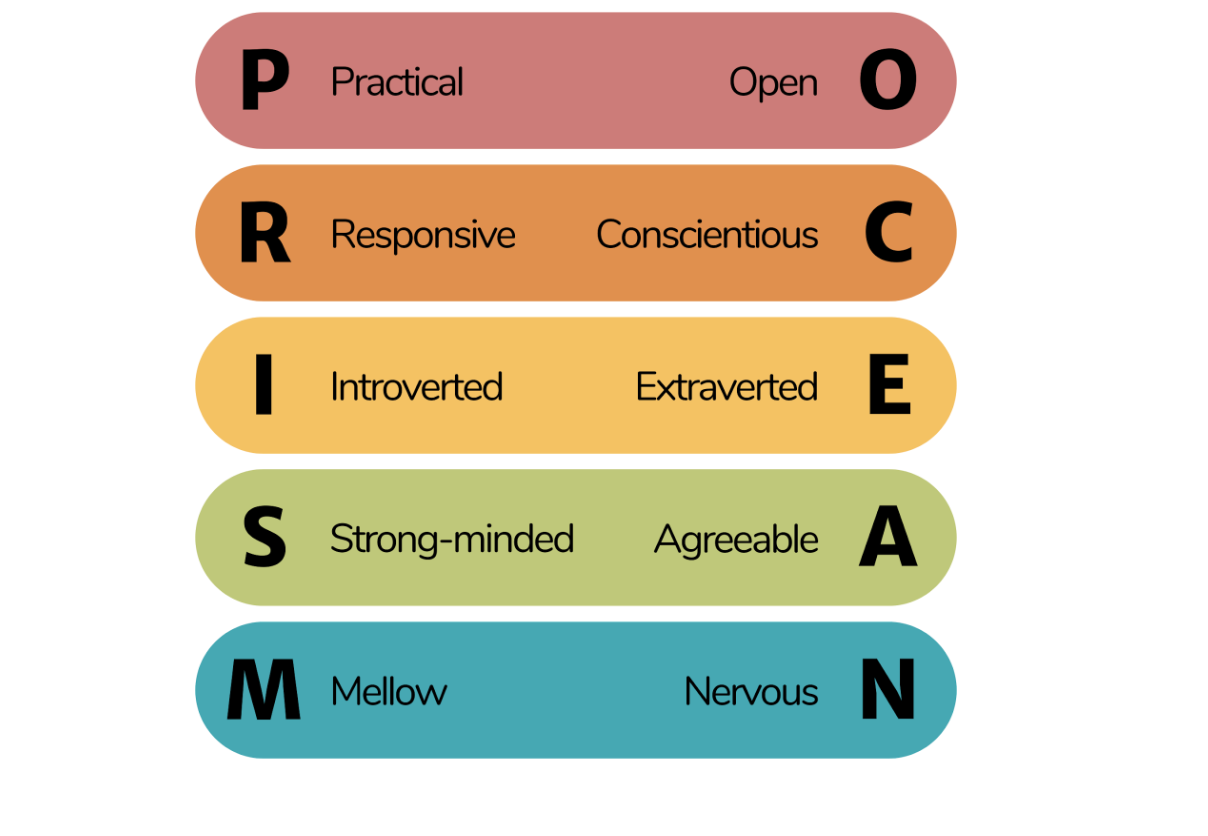
Practical Responsive Introverted Strong minded Mellow Open Conscientious Extraverted Agreeable Nervous Penkin Consulting Anagram

If you’re familiar with DISC assessments or maybe you’ve taken a quiz to find out what kind of bird you are or something like that, then you know it’s based on repeating personality questions to get a predicted outcome. 

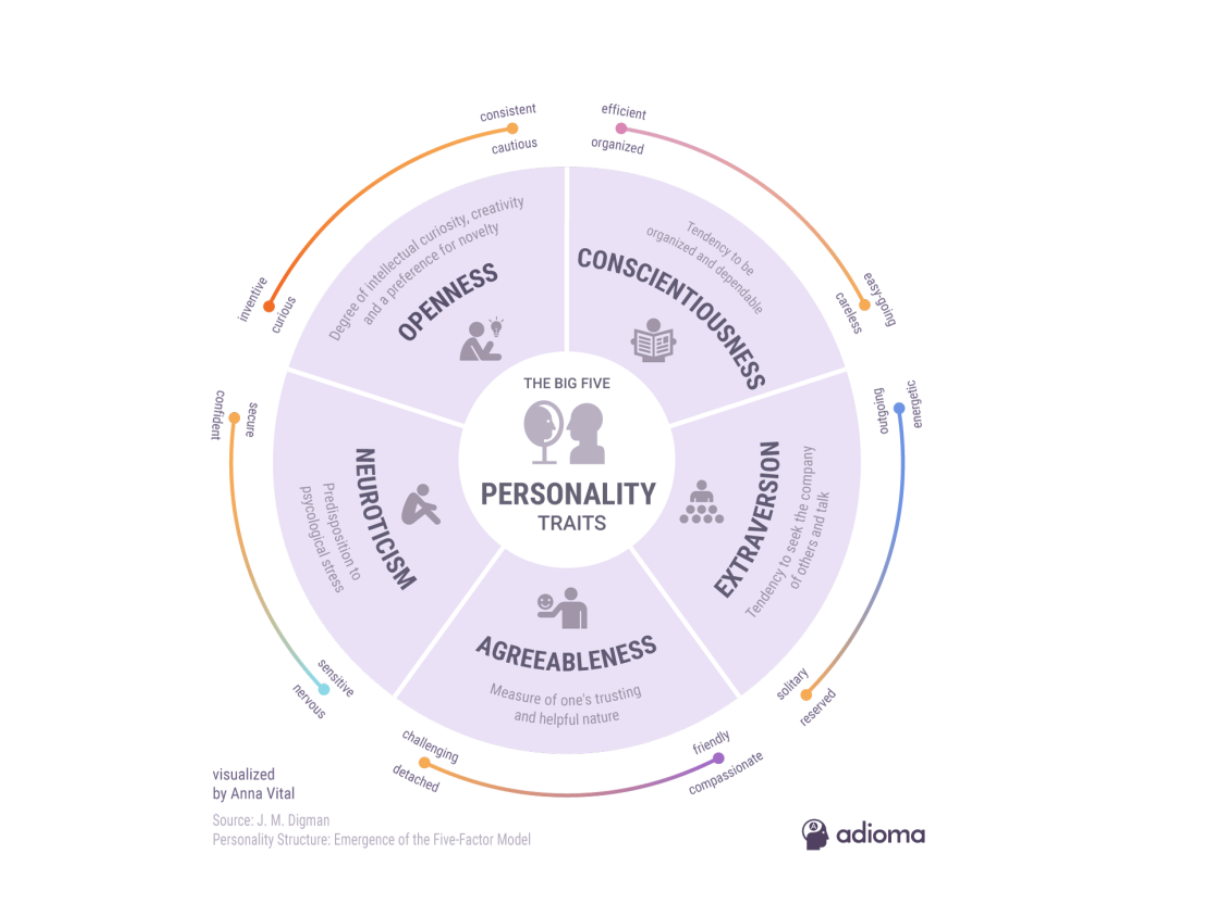
Today, let’s talk about the "Big Five" personality traits, often remembered by the acronym OCEAN. OCEAN describes a broad spectrum of the human personality. There is no
right or wrong way to answer or interpret these traits and often employers use tests like these to place their teams in a way that leads to the most success and happiness.


The five traits are:
Openness, Conscientiousness, Extraversion, Agreeableness, and Neuroticism 

Let’s dive in…


Openness:

This trait describes an individual's tendency to be imaginative, curious, and open to new experiences. People high in openness are often creative, intellectual, and have a broad range of interests

  • We are more likely to be OPEN in a space that encourages psychological safety
  • So even the most open person can be forced to clam up in a space they don’t feel safe in

Conscientiousness:

This trait reflects a person's level of organization, responsibility, and persistence in achieving goals. High-conscientious individuals are typically hardworking, reliable, and goal-oriented

Extraversion:

This trait relates to an individual's inclination to seek stimulation and attention from others. Extraverts are often sociable, energetic, and enjoy being around people 

Agreeableness:

This trait describes the extent to which a person prioritizes the needs of others. 

Individuals high in agreeableness are typically kind, compassionate, and empathetic

Neuroticism:

This refers to a person's tendency to experience negative emotions (anxiety, sadness, and stress) High-neuroticism individuals tend to be more reactive to stress and may experience a wider range of negative emotions


You can take the quiz here to see how your rank 

Practical Responsive Introverted Strong minded Mellow Open Conscientious Extraverted Agreeable Nervous Penkin Consulting Anagram

If you took the quiz, were you shocked by your result? Do you think your team could benefit from DISC assessments and a lead conversation on what it all means? 


Let me know! Taking these types of quizzes together is a conversation starter that helps us work better together for ultimate safety and best outcomes.

Building psychological safety at work Buffalo NY Penkin Consulting
By Jillian Penkin January 7, 2026
If you're serious about mental health safety in your workspace, you must understand the formula: Psychological Safety + Communication = Happy, healthy teams!

Click to read blog post: Mental Health is Jobsite Safety too
By Jillian Penkin October 10, 2025
The risks of falls, equipment & electricity are real and deserve the attention they get. But there’s another kind of hazard that often gets overlooked: mental health

click to read: Building on Solid Ground: Accountability and Trust in Construction and leadership
By Jillian Penkin August 12, 2025
In the construction industry, trust and accountability aren’t just buzzwords, they’re the bedrock that keeps projects safe, teams engaged, and businesses thriving.

click to read blog post: Intentional Collaboration: Understanding the need for Mentorship and ...
By Jillian Penkin July 28, 2025
Have you ever heard a word used so many times that it begins to lose its impact? I fear that is where many have landed with mentorship.
click to read blog post: retention resolution - Employees don't quit jobs, they quit problems
By Jillian Penkin July 16, 2025
Today, I want us to level set and have a shared understanding on what employee retention means because this has different meanings for different people.
Click to read blog post: Navigating Unconscious Bias: Am I Safe to Speak up Here?
By Jillian Penkin May 21, 2025
Having the confidence to speak up at work is an important part of employee satisfaction. I recently gave a seminar on The Double Bind. In particular, I covered how this impacts women in the workplace and her ability (or inability) to be taken seriously in leadership based on arbitrary societal expectations of how women “should” behave.
Show More